


The plot frame of this episode is a little silly and sarcastic beginning with Finn believing he burned the image of Christ onto his grilled cheese sandwich and ends with him eating the so-called Grilled Cheesus (I once saw an episode of "Miami Ink" where an old lady had a grilled cheese sandwich that supposedly bore the face of Jesus and because she was parting with the sandwich-image she was tattooing it on her arm). Most of the rest of this episode is not so silly nor sarcastic. The Clubbers begin to experience faith and crises of faith throughout the rest of the episode, dealing with things such as Kurt's father Burt having a heart attack and being in a coma, Finn's prayers to be quarterback again and to make it to second base with Rachel and his subsequent loss of faith when Emma tells him these things were not Jesus' doing, Mercedes trying to comfort Kurt through her faith, and a side-view of Judaism through Puck's rendition of "Only the Good Die Young" and Rachel's rendition of "Papa, Can You Hear Me?". Kurt, Finn, and Mercedes, in that order, grow tremendously in themselves and in their different belief systems, with an added bonus of Sue's beautiful arc and coming to grips with her sister's disability and God.
Kurt, at first, displays the tendencies of a typical atheist--I don't want your prayers, your prayers don't do anything for me, your faiths are like the Flying Spaghetti Monster--but he grows into a person of personal belief, that of atheism, and one accepting differing viewpoints and sees the genuineness and love offered to him from these other beliefs, those of his friends, and learns to cherish them as offerings of love for him, something he does believe in.
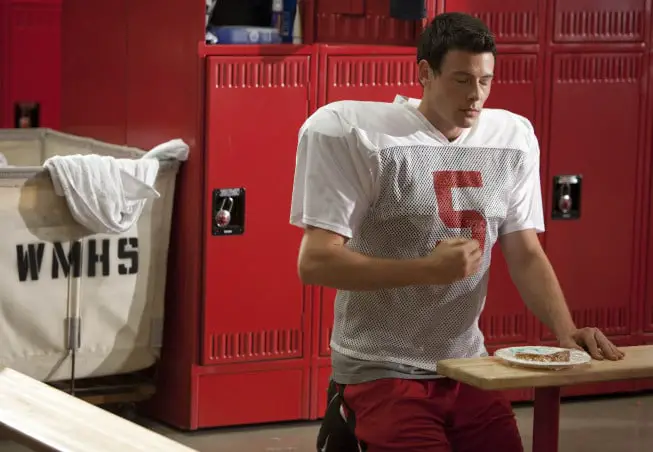
Finn displays the typical new Christian--believing only because of supposed signs from God proving His existence and love for people (in Finn's case, helping the football team win, making him quarterback again, and getting to touch Rachel's boobs). Once these things no longer hold true he turns away from Christ and the faith (as displayed in his awkward and unmoving performance of "Losing My Religion"). Where Finn ends up on the faith scale is left obscure, but one can amass that he is simply confused and content with his life as is, for the time being. However, Finn learns to stand up for his beliefs and also to seek truth--things that make him a better person.
Sue was a beautiful surprise in this episode. She begins as typical ranting and rampaging Sue and it is through her sister, the one she loves the most and will sacrifice anything for, that she begins to come to terms with her sister's disability, with God, and with herself. Sue's simple act of coming to see the Glee Club perform "One of Us" is truly telling of her personal faith journey--Jean believes that "God doesn't make mistakes" and that simple faith of one who seems to have been forgotten or screwed up starts Sue on her journey of accepting that things are not always as they appear and that maybe she has more in common with the Glee Club than she chooses to admit...
While this episode was a beautiful statement of religions and belief systems and of acceptance for who you are no matter who you are, it still has very little to do with the foundation of "Glee"--being a high school singing group trying to make their way to win sectionals and then to win regionals. Unless "Glee" is no about acceptance and tolerance, the episodes need more unity in the foundation. Although, the show was almost bound to go this way; you cannot found a show on a group of singing misfits and not expect it to turn into a musical about acceptance.


0 comments:
Post a Comment